
Why Kids Are Obsessed With Pickleball Right Now
It's loud, it's fast, the paddle is the size of a plate. What’s not to love?
1. The name alone kinda sells it.
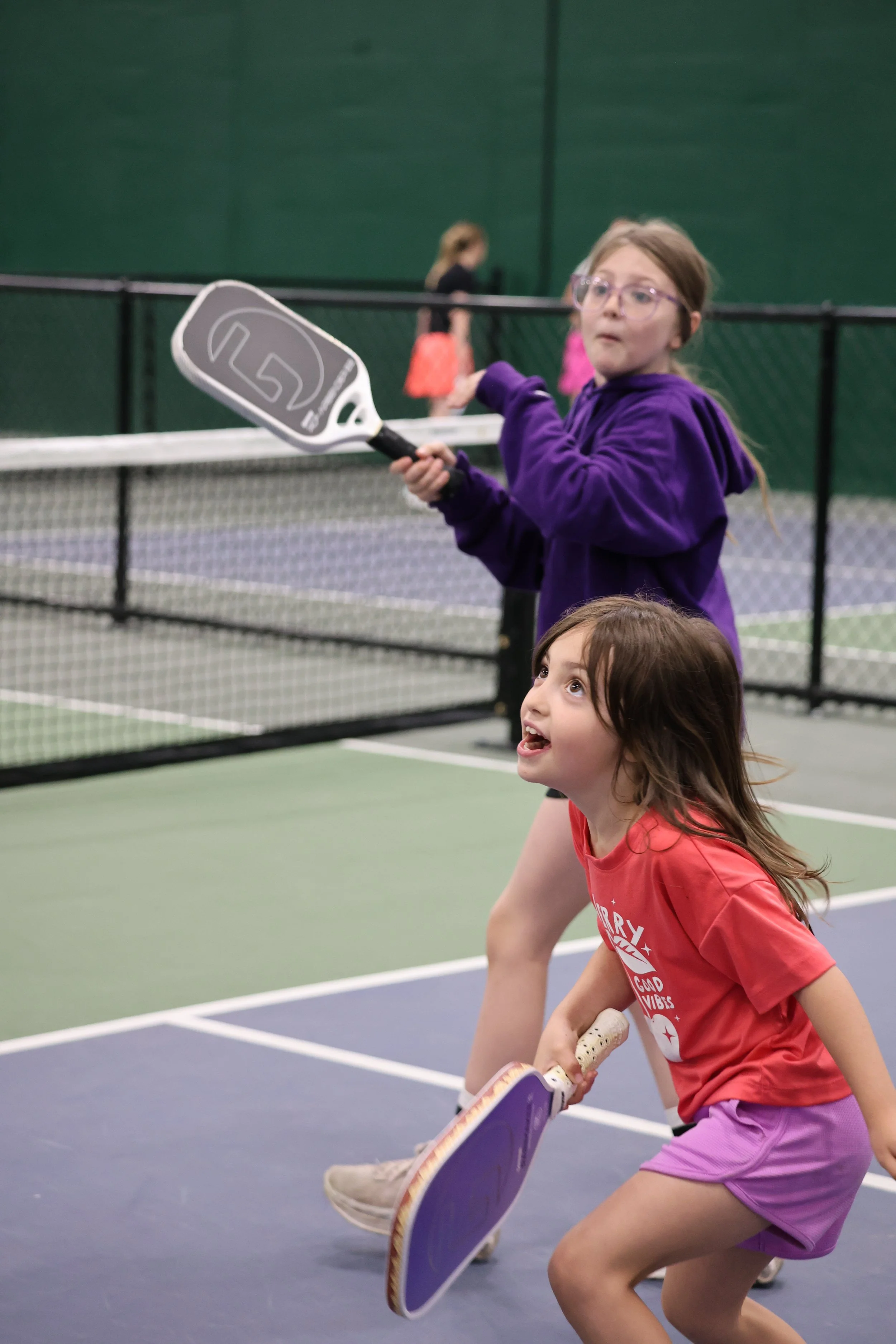
If you told a seven-year-old they were going to play "pickleball," chances are their eyes would light up before they even knew what a paddle looks like. There’s something about a sport named after a condiment that short-circuits the usual resistance to organized activity. Kids who will refuse to eat a pickle will cheerfully sprint onto a court for an hour and a half without complaint.
2. The court’s small enough to feel conquerable
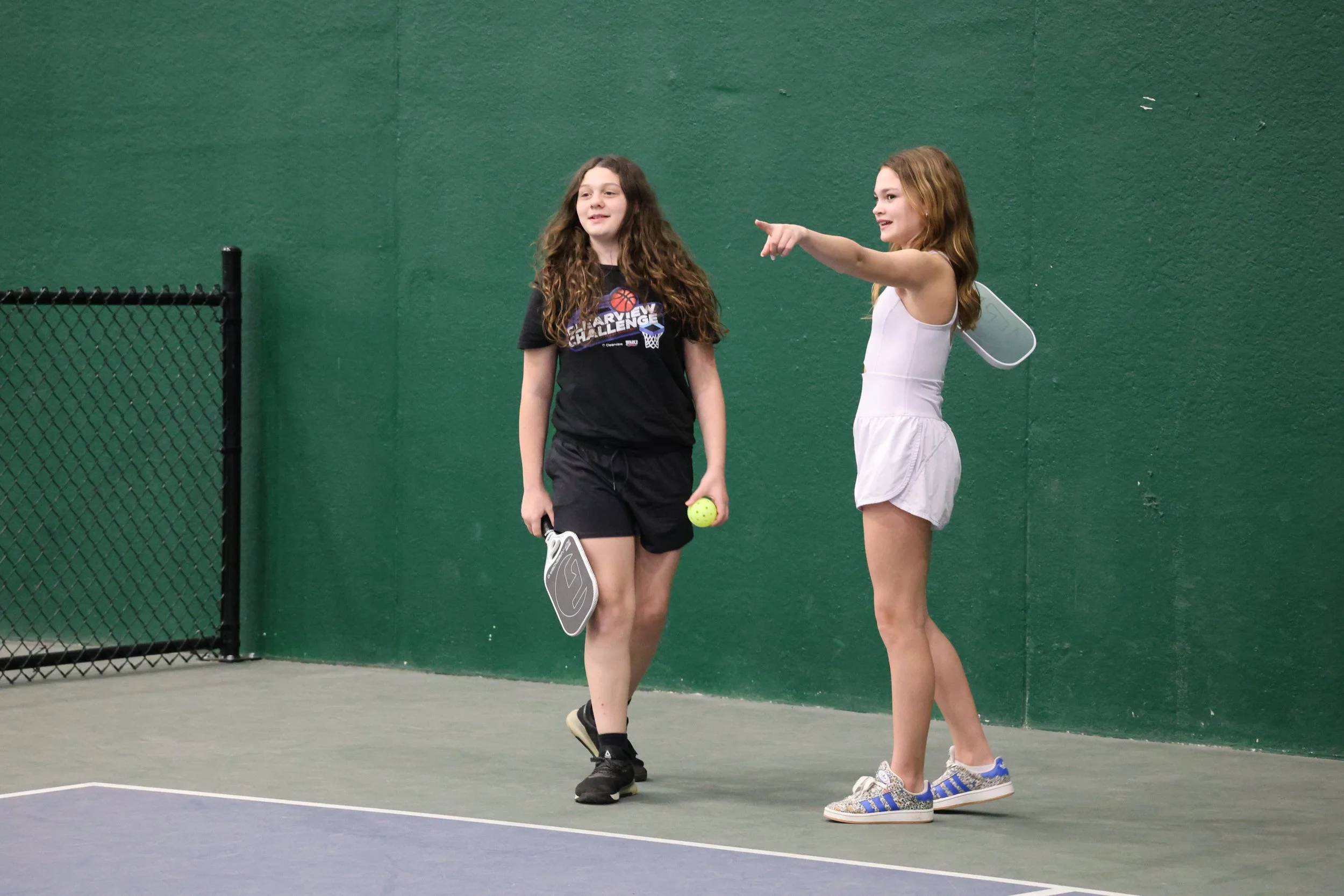
To a kid, a full tennis court probably looks about the size of an aircraft carrier. A pickleball court is decidedly more compact. Kids can actually reach the ball, cover the court, and feel competent within about twenty minutes. For a kid (...and/or some adults 🙋♀️), nothing really bonds a sport faster than being decent, or at least not completely terrible, at it from the start.
3. The noise is… really satisfying
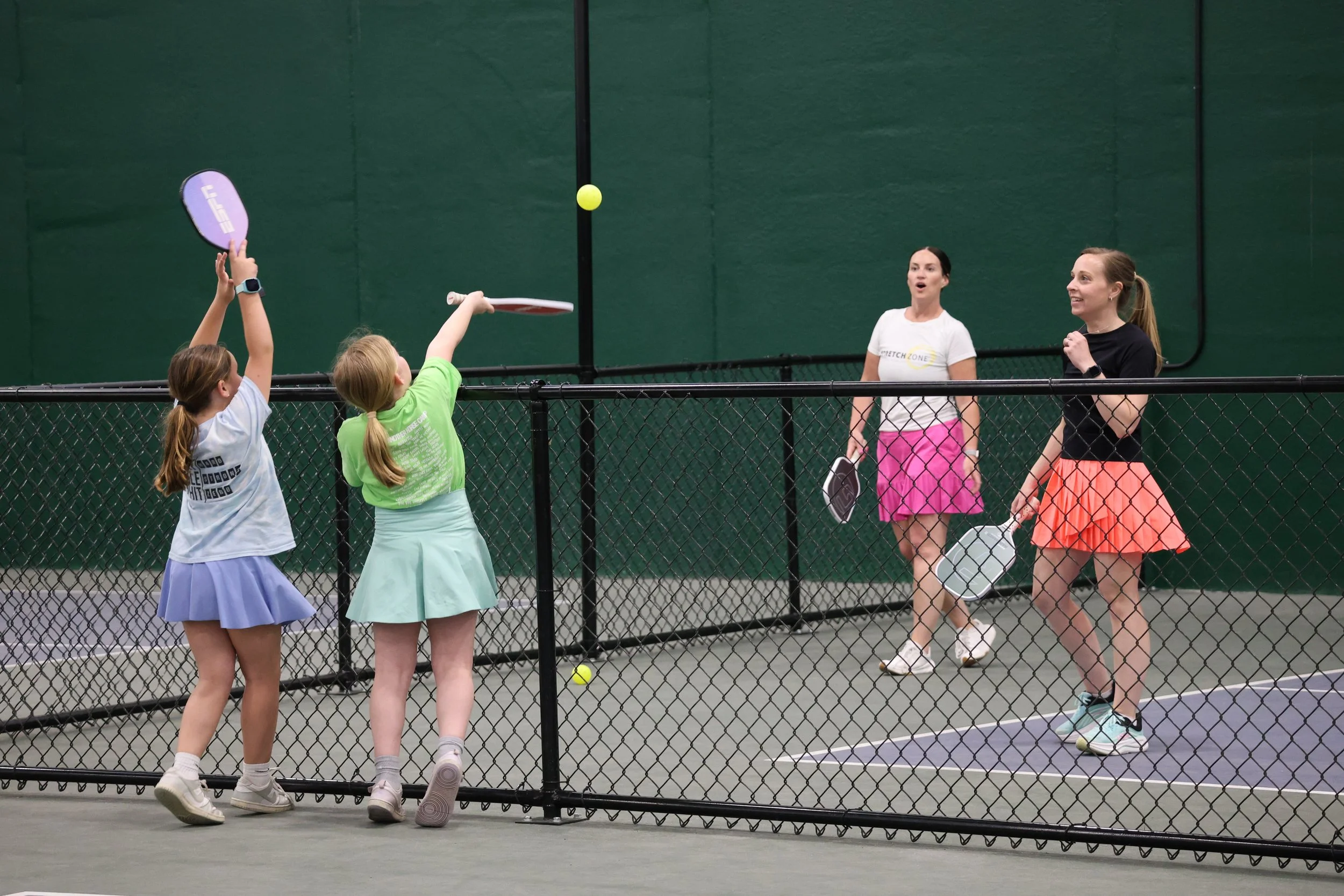
No horrible whispering ASMR here. That sharp little pop when paddle meets ball might be one of the most addicting parts of the sport. Kids spend so much time being told to keep their voices down, stop banging things, and please for the love of everything use their indoor voices. And now they’re handed a paddle and encouraged to whack something as hard as they can? Yes, please. The sound is crisp, percussive, and extremely good.
4. Zero athleticism is required to start
We’ve all been there: spending the first several sessions of a new activity hitting all the wrong notes (or nothing at all). It’s humbling, which is not something kids enjoy. But pickleball has the slower ball, the short court, and the big ol’ paddle face that makes everyone look reasonably capable in a single afternoon. Even the kid who usually gravitates toward the snack table will usually find themselves in a good rally. They might not be totally sure how it happened, but clock it! 🤏
5. It’s social for the antisocial
Shy kiddo? Not anymore. Doubles pickleball puts two kids side by side, facing two other kids, in a small enough space that you cannot really ignore each other, but it’s not IN YOUR FACE. There’s strategy, the occasional collision that you giggle about, and there can be some conflict about whether a ball was in or out. Pickleball encourages the kind of interaction that parents spend years hoping will happen naturally. It usually doesn’t happen naturally. We’ll advocate for youth sports all day.
And for the adults who are watching:
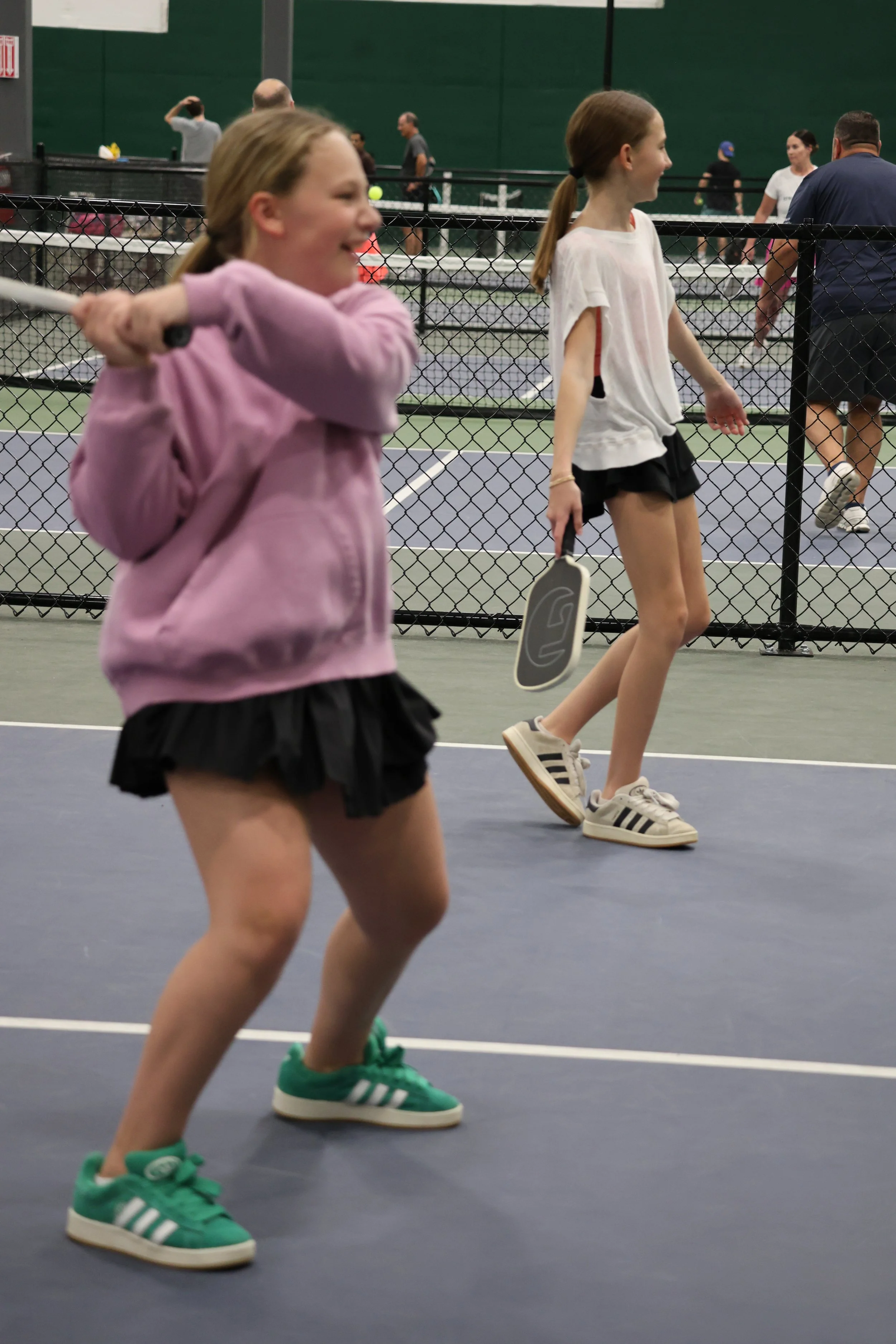
Pickleball is really good for them.
Quick lateral movements, pivots, and short sprints that pickleball demands are excellent for developing coordination balance and agility in growing kids. Pediatric sports researchers have noted that sports requiring rapid directional changes build proprioception (the body's sense of its own position) more effectively than straight-line sports. In other words, chasing that little ball around a court is, by almost any measure, a legitimate physical education.
It also does something nice for their heads.
Pickleball requires just enough strategic thinking to engage the prefrontal cortex without overwhelming it. Tracking the ball, anticipating your opponent, and communicating with your partner has to happen all at the same time. Studies on racket sports in children suggest improvements in attention span and executive function over time. Which is a very clinical way of saying: it tires them out AND it makes them slightly smarter.
Parents, are we not always searching for this exact combination?
Register your kiddos for Camp Matt’s Pickleball this summer.
